







See Profit on Ad Spend vs revenue-only reporting
Profit Bid connects store costs to ad spend so you bid on margin — not vanity Return on Ad Spend.
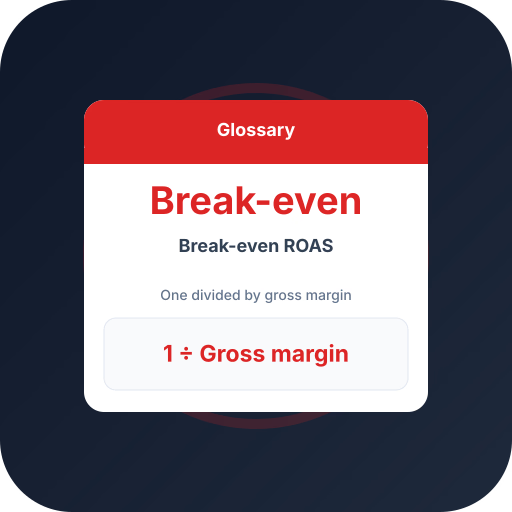
Break-even Return on Ad Spend by gross margin
- Break-even Return on Ad Spend %
Lower margins demand a much higher Return on Ad Spend just to break even — one reason blended targets mislead.
Track Profit on Ad Spend automatically from your store — upload profit conversions and scale winners with A/C/X labels.
Calculating break-even Return on Ad Spend
Take your gross margin as a decimal and divide 1 by it. A 50% margin gives a 200% break-even Return on Ad Spend; a 20% margin gives a 500% break-even Return on Ad Spend.
This is the minimum Return on Ad Spend where ads pay for the product. It does not yet account for fixed costs — so your profit target should sit comfortably above it.
From break-even to profit targets
Once you know break-even Return on Ad Spend, set target return on ad spend with a margin of safety for shipping, fees, returns, and overhead. Many brands target 1.3–2× their break-even Return on Ad Spend.
Better still, bid on Profit on Ad Spend so the system optimizes profit directly instead of a revenue proxy you have to constantly re-derive.
Frequently asked questions
Common questions about this topic — tap to read answers.
Should break-even Return on Ad Spend include shipping?
For accuracy, yes. Use contribution margin (COGS + shipping + fees) instead of gross margin to get a true break-even.
Why do different SKUs have different break-even Return on Ad Spend?
Because their margins differ. A blended account target hides this — segment by margin band for realistic goals.