See Profit on Ad Spend vs revenue-only reporting
Profit Bid connects store costs to ad spend so you bid on margin — not vanity Return on Ad Spend.
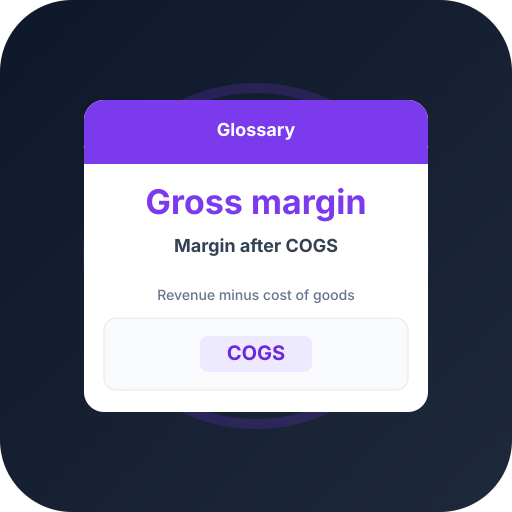
Gross margin split of a $100 sale
- COGS60%
- Gross margin40%
A 40% gross margin means break-even Return on Ad Spend is 250% — the floor before ads erode profit.
Track Profit on Ad Spend automatically from your store — upload profit conversions and scale winners with A/C/X labels.
Gross margin and break-even Return on Ad Spend
If a $100 product costs $60 in COGS, gross margin is 40%. Break-even Return on Ad Spend is 1 ÷ 0.40 = 250% — below that, ads lose money before other costs.
This single relationship is why two stores with the same Return on Ad Spend can have completely different profitability: their margins differ.
What gross margin leaves out
Gross margin stops at COGS. It ignores shipping subsidies, payment fees, and returns — costs that can turn a healthy-looking margin into a loss.
For bidding, extend gross margin into contribution margin so your conversion values reflect true per-order profit.
Frequently asked questions
Common questions about this topic — tap to read answers.
How do I lower my break-even Return on Ad Spend?
Raise gross margin — negotiate COGS, adjust pricing, or shift mix toward higher-margin SKUs. Higher margin means a lower Return on Ad Spend still profits.
Is gross margin enough for ad decisions?
It is a good start but incomplete. Use contribution margin (adds shipping and fees) for accurate profit bidding.