






See POAS vs revenue-only reporting
Profit Bid connects store costs to ad spend so you bid on margin — not vanity ROAS.
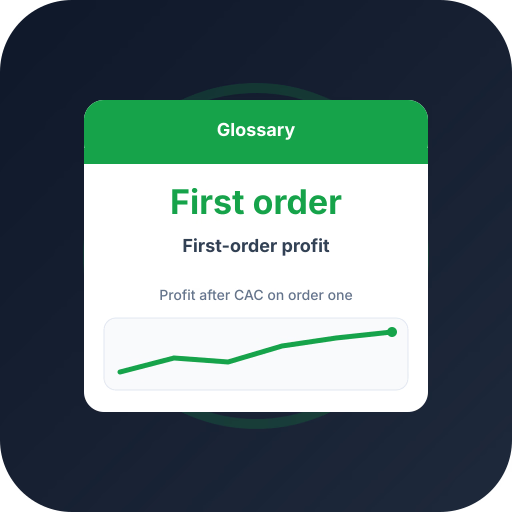
Two acquisition strategies, cumulative profit
- First-order profitable
- First-order loss, high LTV
Betting on LTV can win bigger long-term, but it starts underwater — only safe with strong repeat rates.
Track POAS automatically from your store — upload profit conversions and scale winners with A/C/X labels.
Why it matters for scaling
If every first order is profitable after CAC, you can scale acquisition with little cash risk — growth funds itself.
If first orders lose money, you are betting on repeat purchases to recover CAC. That can be a great strategy, but only with strong RPR and a short payback window.
How to decide your stance
Balance ambition against cash risk:
- Strong repeat rate + fast payback → accept first-order losses to grab share.
- Weak repeat rate → insist on first-order profitability.
- Limited cash → prioritize first-order profit to protect runway.
- Use profit bidding so first-order margin is measured accurately.
Frequently asked questions
Common questions about this topic — tap to read answers.
Is a first-order loss ever okay?
Yes, for subscription or high-repeat businesses with proven LTV and quick payback. It is risky for one-time-purchase catalogs.
How does this relate to payback period?
First-order profitability is payback within a single order. Longer payback stretches recovery across multiple orders and more time.