







See POAS vs revenue-only reporting
Profit Bid connects store costs to ad spend so you bid on margin — not vanity ROAS.
Track POAS automatically from your store — upload profit conversions and scale winners with A/C/X labels.
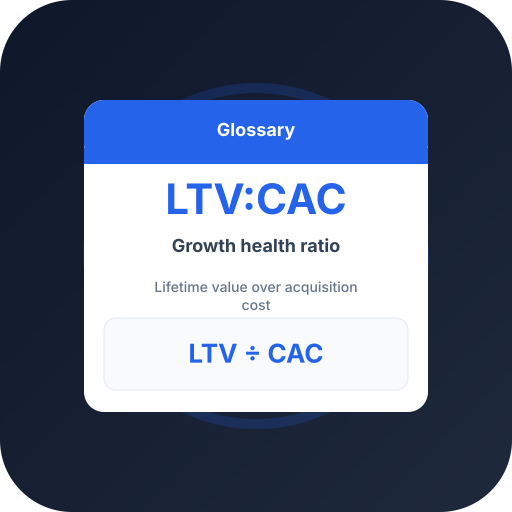
How to read the ratio
A 1:1 ratio means a customer is worth exactly what you paid — no profit. A 3:1 ratio means three dollars of lifetime value per dollar of acquisition cost.
A 6:1 ratio sounds great but often signals you are leaving growth on the table: you could spend more to acquire and still profit.
Improving LTV:CAC
Two levers: raise the numerator or lower the denominator.
- Lift LTV via repeat rate, AOV, and margin.
- Lower CAC via conversion rate and channel efficiency.
- Reallocate budget toward high-LTV acquisition sources.
- Feed profit values to bidding so CAC tracks customer value.
Frequently asked questions
Common questions about this topic — tap to read answers.
Is a higher LTV:CAC always better?
Not necessarily. A very high ratio may mean you are under-spending on acquisition and ceding market share to competitors.
How long a horizon should LTV cover?
Match it to your payback tolerance — often 12–24 months. Very long horizons overstate value and risk cash-flow problems.