








See POAS vs revenue-only reporting
Profit Bid connects store costs to ad spend so you bid on margin — not vanity ROAS.
Track POAS automatically from your store — upload profit conversions and scale winners with A/C/X labels.
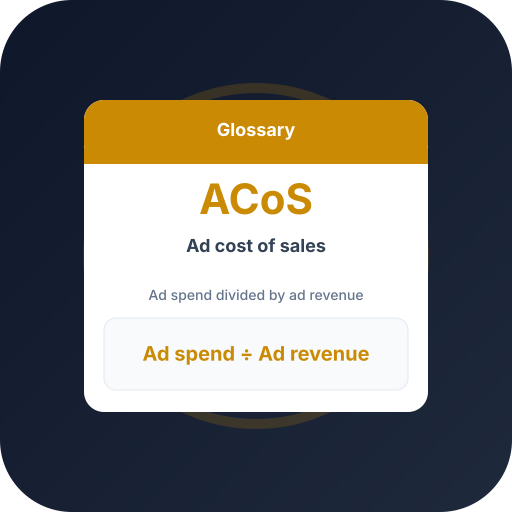
ACoS formula and how to read it
Advertising Cost of Sales divides the money you spent on ads by the revenue those ads generated. Spend $250 to drive $1,000 in ad sales and your ACoS is 25%.
Because ACoS and ROAS describe the same relationship, you can convert instantly: ACoS = 1 ÷ ROAS. A 400% ROAS is a 25% ACoS; a 200% ROAS is a 50% ACoS.
Why low ACoS is not always good
Chasing the lowest possible ACoS often caps growth: you stop bidding on profitable-but-competitive terms. Meanwhile, a low ACoS on a thin-margin SKU can still lose money once COGS, fees, and shipping are counted.
This is why profit-first merchants translate ACoS into POAS — profit on ad spend — so bidding respects real contribution margin instead of headline revenue.
Frequently asked questions
Common questions about this topic — tap to read answers.
Is a lower ACoS always better?
No. A very low ACoS usually means you are under-investing. The right ACoS sits below your break-even (margin) with enough headroom for profit and growth.
How is ACoS different from ROAS?
They are inverses of the same ratio. ACoS = 1 ÷ ROAS. Amazon sellers tend to use ACoS; Google/Meta advertisers use ROAS.