








See POAS vs revenue-only reporting
Profit Bid connects store costs to ad spend so you bid on margin — not vanity ROAS.
Track POAS automatically from your store — upload profit conversions and scale winners with A/C/X labels.
The AOV-to-profit waterfall
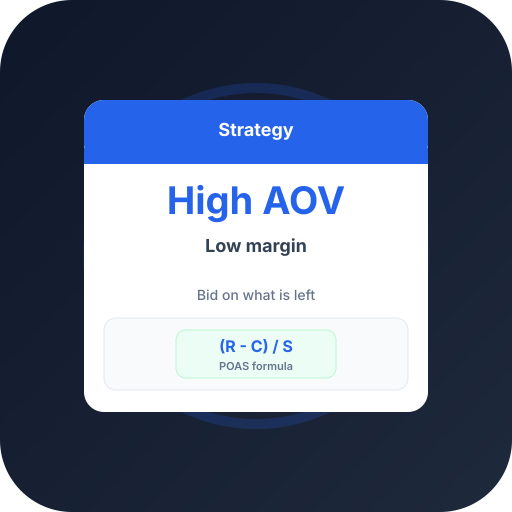
Start with the order value, then subtract COGS, shipping, and payment fees. What remains is the contribution margin available for ads and profit.
For big-ticket, low-margin goods (electronics, furniture), that residue can be surprisingly small.
Bidding on the residue
Upload the residual profit as the conversion value so bids reflect what the order actually contributes, not its sticker price.
This prevents over-bidding on impressive-looking but thin orders.
Frequently asked questions
Common questions about this topic — tap to read answers.
Why do high-AOV orders sometimes lose money?
Because AOV is revenue, not profit. Heavy COGS, shipping on bulky items, and fees can leave a thin or negative margin.
How do I bid on contribution margin?
Feed the post-cost profit as the conversion value. Profit Bid computes it per order from your store data.